
Key Takeaways
- Globalisation directly shapes hiring, compliance, payroll, and market entry decisions.
- Economic and political globalisation have the strongest impact on hiring and regulatory risk.
- Cultural and technological globalisation influence workforce performance and scalability.
- Misalignment between expansion strategy and local regulations increases cost and compliance exposure.
- Businesses that align workforce planning with globalisation trends gain faster entry and stronger operational control.
What Is Globalisation in Business?
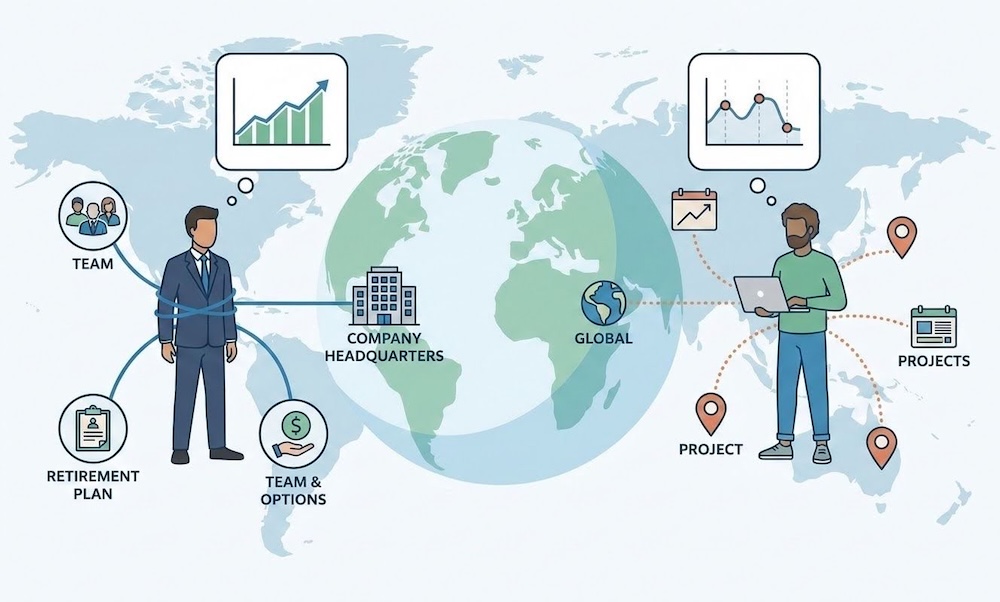
Globalisation in business refers to the integration of markets, workforce, and operations across countries, enabling companies to hire, operate, and scale internationally.
For business leaders across HR, legal, and finance, globalisation affects:
- Employment structures and labour laws
- Payroll and tax obligations
- Workforce mobility and immigration
- Market entry speed and cost
To understand how this applies in practice, read What is Global Expansion in Business?
Why Understanding The Types Of Globalisation Matters
Each type of globalisation influences a different part of your expansion strategy.
Without clear alignment, businesses face:
- Delayed hiring and onboarding
- Increased compliance exposure
- Inefficient cost structures
- Poor workforce retention
From a cost and speed perspective, mapping globalisation types to your hiring model improves decision-making and reduces operational risk.
What Are The Main Types Of Globalisation?
Globalisation is widely understood as a multi-dimensional process encompassing economic, political, social, and technological integration, with environmental factors increasingly shaping global business strategy.
Source: International Monetary Fund (2024), Back to Basics: What Is Globalization?
-
Economic Globalisation
Economic globalisation focuses on the movement of goods, capital, and labour across borders.
Business impact:
- Cross-border hiring and payroll
- Tax and social contribution obligations
- Cost optimisation across regions
What this means for businesses:
International hiring must align with local tax systems, employment costs, and payroll structures from the outset.Explore more in What is Cross-border Hiring & How Does it Benefit Businesses?.
-
Cultural Globalisation
Cultural globalisation reflects the exchange of workplace norms, expectations, and behaviours across markets.
Business impact:
- Employee engagement and retention
- Management styles and communication
- Employer branding across markets
What this means for businesses:
Misalignment with local culture can lead to higher attrition and reduced team performance. -
Technological Globalisation
Technological globalisation enables global operations through digital infrastructure.
Business impact:
- Remote hiring and distributed teams
- Cloud-based HR and payroll systems
- Data protection requirements
According to the World Economic Forum, digital connectivity is accelerating cross-border workforce integration and enabling remote employment models.
What this means for businesses:
Technology enables faster expansion but increases exposure to data and cybersecurity risks. -
Political Globalisation?
Political globalisation refers to international regulations, labour laws, and governance frameworks.
Business impact:
- Employment law compliance
- Immigration and visa requirements
- Regulatory risk exposure
International labour standards set by the ILO shape employment practices globally.
What this means for businesses:
Regulatory requirements directly affect hiring timelines, costs, and operational risk. -
Environmental Globalisation
Environmental globalisation reflects shared sustainability standards and ESG requirements across markets.
Business impact:- ESG reporting obligations
- Sustainable supply chain expectations
- Regulatory compliance
What this means for businesses:
Operations must align with environmental regulations and reporting standards in each jurisdiction.
How Different Types Of Globalisation Affect Hiring Strategy
Globalisation shapes how businesses structure international hiring and workforce planning.
Key Factors
- Market entry speed: Driven by regulatory and economic conditions
- Cost structure: Influenced by tax systems and employee benefits
- Compliance risk: Determined by local labour laws and reporting obligations
- Talent access: Shaped by cultural alignment and digital infrastructure
For structured hiring across Asia, read: Global Workforce Planning for SMEs: Hiring Across Asia Without Complexity
Real-World Example: Expanding Into Southeast Asia
A UK-based technology company entering Southeast Asia shows how different types of globalisation operate together in practice:
- Economic globalisation: Lower labour costs in Malaysia and the Philippines improved overall cost efficiency.
- Cultural globalisation: Local workforce expectations required adjustments to HR policies and benefits.
- Political globalisation: Each market had distinct employment laws and statutory contribution requirements.
- Technological globalisation: Remote hiring enabled fast team setup without the need for local offices.
Business Outcome
By using an Employer of Record (EOR), the company entered three markets within 8 weeks while maintaining full compliance.
According to the World Bank, cross-border labour mobility and migration remain central to global economic development, shaping how countries integrate talent and expand across borders.
Strategic Comparison: Types Of Globalisation And Business Impact
Understanding how each type of globalisation affects business operations helps teams make informed decisions on hiring, compliance, and market entry.
| Type of Globalisation | Primary Focus | Business Impact | Key Risk | Recommended Approach |
| Economic | Trade & labour | Payroll, tax, costs | Tax non-compliance | Use EOR or payroll experts |
| Cultural | Workforce behaviour | Retention, engagement | Misalignment | Local HR expertise |
| Technological | Digital systems | Remote hiring, scalability | Data risk | Secure HR infrastructure |
| Political | Regulations | Hiring legality | Regulatory penalties | Compliance-led hiring |
| Environmental | ESG standards | Reporting, operations | Non-compliance | Align with local laws |
Choosing The Right Expansion Model Based On Globalisation Types
Beyond legal compliance, your hiring model should align with how economic, cultural, regulatory, and operational factors affect each market.
Local Entity Setup
- Full operational control
- Higher setup and maintenance costs
- Longer time to enter the market
Employer of Record (EOR)
- Faster market entry
- Reduced administrative workload
- Built-in compliance across jurisdictions
Compare both in EOR vs Local Entity Setup: A Strategic Framework for Global Expansion.
Where Globalisation Trends Are Heading In 2026
Global expansion is becoming more structured, compliance-driven, and focused on operational efficiency.
Key Trends and What They Mean for Businesses
- Regional hiring strategies (ASEAN and APAC): Companies are prioritising region-specific talent hubs, requiring localised HR and payroll strategies.
- Increased employment regulation: Stricter labour laws and reporting obligations increase the need for compliant hiring structures.
- Rising demand for flexible hiring models: Businesses are shifting towards scalable solutions to enter and test new markets with lower risk.
- Growth in EOR adoption: More companies are using EOR services to hire quickly without setting up local entities.
See: Top Countries for EOR Hiring in 2026 (And Why Southeast Asia Leads)
How To Align Globalisation Strategy With Workforce Planning
Aligning globalisation strategy with workforce planning ensures that hiring decisions support both market entry and long-term operations.
Recommended Steps
- Identify target markets: Prioritise countries based on economic potential and regulatory environment.
- Assess hiring feasibility: Evaluate compliance requirements, talent availability, and cost implications before entry.
- Select the right hiring model: Choose between EOR or local entity based on speed, control, and risk.
- Implement payroll and HR systems: Ensure infrastructure supports local compliance and reporting from day one.
- Scale with compliance monitoring: Continuously review regulatory changes as operations grow.
For execution strategy read: How SMEs Should Sequence Hiring Across Asia: A Country-by-Country Workforce Rollout Strategy
Managing Compliance Across Different Globalisation Types
Compliance remains the primary risk area in global expansion.
Key Areas
- Employment contracts: Must align with local labour laws to ensure enforceability.
- Payroll taxes and contributions: Accurate calculation and reporting are essential to avoid fines.
- Immigration and visas: Proper work authorisation is required for foreign employees.
- Data protection regulations: Handling employee data must comply with local privacy laws.
Read: Navigating Compliance and Local Regulations Across ASEAN: A Guide for Global Employers
How Eos Global Expansion Supports Global Hiring
Eos Global Expansion supports businesses navigating globalisation with a compliance-first, execution-focused approach.
Services Include
- Employer of Record (EOR): Hire in new markets quickly without setting up a local entity.
- Visa and immigration support: Ensure employees are authorised to work from day one.
- Multi-country payroll and accounting: Maintain compliant, accurate payroll across jurisdictions.
- Recruitment and talent acquisition: Access and hire the right talent aligned with local market conditions.
If you’re exploring global hiring options, speak with our Eos Global Expansion team to understand the best approach for your expansion plans.
Conclusion: Turning Globalisation Into A Competitive Advantage
Understanding the types of globalisation enables more effective hiring, compliance, and expansion decisions.
Businesses that align their strategy accordingly achieve:
- Faster market entry through structured hiring models
- Reduced compliance risk across jurisdictions
- Stronger workforce performance with locally aligned practices
If you’re planning your next market entry, speak with our Eos Global Expansion specialist to get clear, practical guidance tailored to your business.
FAQs
1. What Are Examples Of Globalisation In Business?
Examples of globalisation in business include hiring remote teams across multiple countries, outsourcing operations to lower-cost regions, and expanding into new markets through local partnerships or Employer of Record (EOR) services.
2. Which Type Of Globalisation Has The Greatest Impact On Hiring?
Economic and political globalisation have the strongest influence on hiring decisions.
- Economic factors determine employment costs, payroll structures, and tax exposure
- Political frameworks define labour laws, employment contracts, and compliance requirements
3. What Are The Advantages And Disadvantages Of Globalisation For Businesses?
Advantages:
- Access to global talent and new markets
- Cost optimisation through regional hiring
- Greater scalability and operational flexibility
Disadvantages:
- Complex compliance and regulatory requirements
- Payroll, tax, and reporting challenges
- Cultural and operational misalignment risks
4. How Do Companies Manage Globalisation Risks When Expanding?
Companies reduce globalisation risks by:
- Ensuring compliance with local labour laws and tax regulations
- Using Employer of Record (EOR) services to minimise legal exposure
- Implementing standardised payroll and HR systems
- Adapting hiring strategies to local cultural and regulatory conditions
Eos Global Expansion supports this with compliant hiring, payroll, and workforce management.
5. What Are The Costs Of Global Expansion For Businesses?
Core cost components include:
- Entity setup, legal registration, and ongoing administration
- Payroll taxes, social contributions, and statutory benefits
- Local salary benchmarks and compensation structures
- Compliance, accounting, and HR management overhead
An Employer of Record (EOR) enables faster entry by removing setup costs while maintaining compliance.
6. Why Should Businesses Use Eos Global Expansion For International Hiring?
Eos Global Expansion supports businesses with compliant hiring, payroll, and workforce management across multiple countries. With over 20 years of experience, Eos combines legal expertise with cultural understanding. Book a free consultation and speak with our experts today.