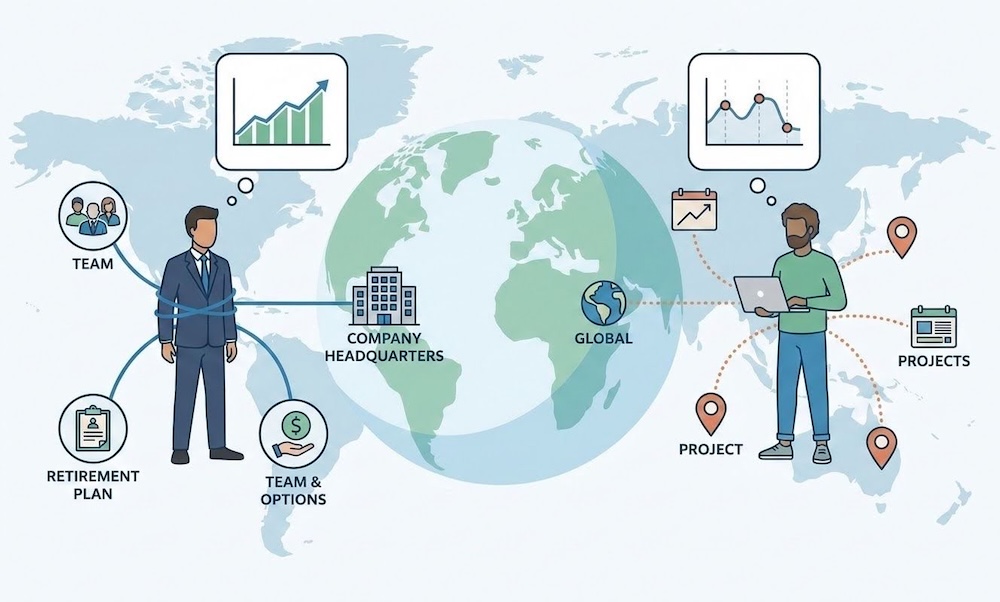

Quick Answer: A Japan PEO (Professional Employer Organisation) helps you hire in Japan while outsourcing payroll administration, statutory benefits, and HR support. It reduces setup effort, improves compliance control, and lets you move faster without building a local HR and payroll function.
Key Takeaways
- A Japan PEO reduces the admin and compliance workload of hiring in Japan.
- It helps ensure payroll, statutory benefits, and employment documentation are handled correctly.
- It can be more cost-efficient than setting up an entity when you are testing the market or hiring a small team.
- It supports faster scaling because onboarding and payroll processes are already in place.
- Eos Global Expansion supports Japan hiring through a boutique approach, meaning you work directly with senior professionals focused on compliant execution and risk control.

What A Japan PEO Helps You Achieve
Hiring in Japan usually means coordinating compliant employment documentation, statutory enrolments, payroll processes, and employee support workflows.
A Japan PEO reduces the operational load by taking ownership of these employer-side tasks, so you can focus on building the market while maintaining control of day-to-day delivery and performance.
If you are validating requirements before making offers, start with the Japan employment and hiring guide.
1) Faster Market Entry With Lower Setup Burden
Hiring in Japan requires correct employment documentation, payroll setup, and statutory registrations. A Japan PEO reduces internal workload by handling the operational steps that often slow early hiring.
For a practical checklist of what employers must set up, download Eos’s Japan Country Guide.
Best fit when:
- you are making your first hire in Japan
- you need a compliant setup quickly
- you want to test demand before committing to an entity
2) Better Control Over Compliance Risk
Japan’s employment rules are specific and enforced. Most compliance issues come from overtime calculation, leave entitlements, statutory insurance coverage, offboarding documentation, and employee data handling.
Key areas a Japan PEO helps you keep under control:
- Overtime pay rules (progressive premium structure): Japan’s Labour Standards Act requires premium pay for overtime, with higher premiums once overtime exceeds set thresholds.
- Paid leave requirements: Employers must grant annual paid leave once eligibility conditions are met. See Labour Standards Act (Article 39: Annual paid leave).
- Employment insurance obligations: Employers must operate within Japan’s employment insurance framework for covered workers. See Employment Insurance Act (Act No. 116 of 1974).
- Severance and termination exposure: While severance is often shaped by company rules and market practice, termination handling and documentation are a frequent risk area in Japan. A PEO helps you run offboarding in a way that reduces dispute risk and keeps records consistent.
- Employee data protection: Japan’s Act on the Protection of Personal Information (APPI) sets expectations for secure handling of personal data and, in certain cases, breach reporting.
3) Payroll And Tax Administration Handled Correctly
Japan’s payroll is process-heavy because it combines progressive income tax withholding, resident tax, and mandatory social insurance contributions. Employers typically need to manage deductions across multiple layers, including:
- National income tax (progressive withholding)
- Resident tax (commonly applied at around 10%, administered through local municipalities)
- Social insurance contributions, including health insurance, pension, long-term care (where applicable), and employment insurance
For teams unfamiliar with Japan payroll rules, the usual risks are miscalculations, late filings, and incomplete documentation, which can create penalty exposure and internal admin drag.
A Japan PEO reduces that risk by handling payroll operations end-to-end, including salary processing, tax withholdings, and social insurance administration.
Japan payroll reporting also involves detailed documentation requirements, including year-end tax adjustment processes (nenmatsu chōsei) and recurring statutory filings.
For structured employer guidance, see the Japan tax guide.

4) More Predictable Costs Than Entity Buildout (In Early Stages)
Setting up a legal entity in Japan usually requires meaningful upfront spend and ongoing administration. Common structures include Kabushiki Kaisha (KK) and Godo Kaisha (GK).
A Japan PEO can bypass much of that early-stage burden by allowing you to hire employees and operate in Japan without establishing a subsidiary at the outset. This helps you:
- reduce entity setup and legal formation costs
- avoid building in-house payroll and HR infrastructure too early
- limit ongoing administrative overhead while headcount is still small
- reallocate budget into customer acquisition and local delivery
Best fit when:
- you are a startup or SME entering Japan for the first time
- you are testing product-market fit or building an early commercial presence
- you want a lower-risk route before committing to a long-term entity strategy
For budgeting based on total employment cost (not just salary), see cost of hiring in Japan.
5) HR Support Aligned With Japanese Hiring Expectations
Japan hiring success depends on how well you align with local expectations around communication, negotiation, and long-term employment norms.
A Japan PEO gives you access to local HR expertise that helps you avoid common missteps such as:
- Misreading employment expectations: Long-term employment is still valued, so candidates may weigh stability and benefits more heavily than short-term incentives.
- Missing cultural signals: Small behaviours matter, including formal meeting etiquette and business practices that influence trust.
- Assuming a purely performance-based pay model: Some sectors still lean towards seniority-based structures.
A Japan PEO can support you with market-aligned offer structures, onboarding workflows, and employee relations support. For country-specific hiring requirements, use the Japan employment and hiring guide.
6) Easier Scaling Without Rebuilding Your HR And Payroll Stack
Expanding into Japan demands operational attention. A Japan PEO removes much of that friction by running the employer-side workflows, which helps you keep internal focus on:
- product development and localisation
- market research and customer engagement
- partnerships, sales execution, and pipeline growth
It also gives you flexibility. Whether you are hiring one person or building a small team, a PEO model supports fast, compliant hiring without rebuilding local infrastructure or repeated admin restructuring.
7) Benefits Administration That Supports Recruitment And Retention
In Japan, benefits are a core part of what candidates expect. Packages are typically built around:
- health insurance (Shakai Hoken) and related statutory coverage
- retirement and pension contributions
- commuting allowances
- annual bonus norms (common in many sectors)
- paid leave and additional employer-led benefits
A Japan PEO ensures statutory benefit obligations are handled correctly and consistently, reducing onboarding friction and strengthening retention.
Japan Expansion Hiring Models: What To Use And When (Decision Table)
| Your situation | Best-fit approach | Why it works | Risk if you get it wrong |
| First hire in Japan (1–2 roles) | Japan PEO / EOR-led hire | Fast start with compliant contracts, payroll and statutory setup handled | Delays, non-compliant onboarding, payroll errors |
| Market test (small team, uncertain headcount) | Japan PEO with flexible scaling | Predictable costs and no early entity overhead | Over-committing to entity costs before revenue is proven |
| Need to hire quickly (sales or client-facing role) | Japan PEO / EOR | Shortens time-to-hire while keeping employer obligations covered | Missed start dates, early compliance exposure |
| You already have a Japan entity | PEO-style HR + payroll support | Offloads payroll admin and HR operations while you keep entity control | Internal admin drag, reporting gaps, avoidable disputes |
| Growing team (5–20 hires over 6–12 months) | Hybrid plan (PEO now, entity later if needed) | Scale first, then move to an entity when headcount and revenue justify it | Rushing into governance and ongoing admin too early |
| Japan becomes a core market (stable headcount) | Local entity + structured payroll/HR ops | Full control and long-term efficiency at scale | Underestimating governance, tax filings, and HR workload |
If you share your expected headcount and hiring timeline, Eos will recommend the lowest-risk model and the fastest compliant route to hire. Speak with an Eos Japan consultant today.
Conclusion
A Japan PEO helps you hire in Japan with less operational drag and stronger compliance control. It is most useful when you need to hire quickly, test the market, or scale a small team without committing to entity setup and an in-house payroll buildout.
Speak to an Eos Global Expansion consultant to review your Japan hiring plan and map the compliance steps before you make offers.
Download Eos’s Japan Country Guide to review key hiring requirements and employer obligations before you start onboarding in Japan.
FAQs
What is a Japan PEO?
A Japan PEO supports HR administration, payroll processing, and statutory benefits handling for employees based in Japan.
Do I Need A Japanese Entity To Use A Japan PEO?
If the provider acts as the legal employer (EOR-style), you can often hire without setting up a Japanese entity. If it is HR outsourcing only, you may need a local entity.
Is A Japan PEO The Same As An Employer of Record?
Not always. The deciding factor is whether the provider becomes the legal employer for your hire.
What Does A Japan PEO Manage vs What Stays With Us?
A PEO usually manages payroll administration and statutory benefits. You typically keep control of the role, day-to-day management, and performance expectations.
How Do Payroll Taxes Work In Japan For Employers?
Employers must handle withholding and reporting processes accurately. For a structured overview, see the Japan tax guide for employers.
What Should We Budget For When Hiring In Japan?
Total cost includes salary, employer-side obligations, and payroll administration. Use the cost of hiring in Japan guide to model offers accurately.
How Does Eos Support Hiring In Japan?
Eos Global Expansion supports Japan hiring with a boutique approach focused on compliant execution and practical oversight. Start with the Japan employment and hiring guide for requirements and hiring steps.