
Difference Between A Contractor And Employee: Impact On Global Hiring
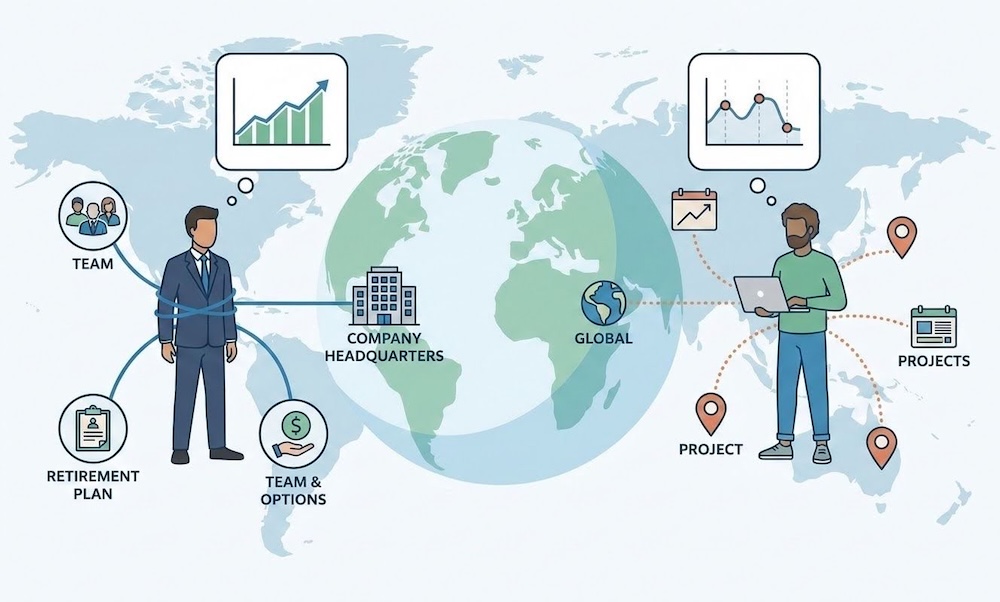
Key Takeaways The difference between a contractor and employee affects tax, compliance, and control over work. Misclassification can trigger fines, backdated taxes, and reputational risk across multiple jurisdictions. Contractors offer flexibility and speed; employees provide stability and long-term value. Worker classification rules vary by country, requiring local expertise to stay compliant. Employer of Record (EOR) […]
What Is An EOR Provider? A Guide To Employer of Record

Quick answer: An EOR provider is a third-party company that becomes the legal employer for your worker in a specific country, running compliant employment contracts, payroll, tax withholding, and statutory contributions, while your business directs the employee’s day-to-day work. Key Takeaways An Employer of Record (EOR) provider becomes the legal employer in-country, handling contracts, payroll, […]
How Payroll Affects Global Expansion

Key Takeaways Payroll structure directly influences compliance exposure and tax risk. Statutory contribution systems vary significantly across jurisdictions. Misaligned payroll can unintentionally trigger permanent establishment risk. Payroll governance determines whether EOR, entity setup or hybrid models are appropriate. Eos Global Expansion supports compliant payroll governance across 27+ countries, aligning workforce models with tax, regulatory and […]
How SMEs Should Sequence Hiring Across Asia: A Country-by-Country Workforce Rollout Strategy

Key Takeaways Hiring across Asia is rarely a single-country decision; sequencing determines cost, compliance exposure, and scalability. Poor hiring order creates payroll fragmentation, inconsistent employment frameworks, and regulatory drag. SMEs should prioritise countries based on talent availability, statutory complexity, cost-to-productivity balance, and regulatory maturity. Employer of Record (EOR) models allow phased entry without premature entity […]
6 Key Challenges of Cross-Border Hiring and How Global Employers Can Overcome Them

Key Takeaways Cross-border hiring introduces legal, payroll, and compliance risks that typically surface as teams scale. Employment law, payroll, and termination rules differ by country and require local oversight. Early hiring model decisions directly affect long-term legal and financial exposure. Consistent workforce management is essential to compliance and employee experience. Eos Global Expansion supports compliant […]
The Hidden Compliance Risks of Scaling Global Teams Without a Local EOR Partner

Key Takeaways Global compliance risks increase sharply when organisations scale internationally without local employment expertise. Payroll errors, worker misclassification, and contract misalignment are among the most common cross-border employment risks. Termination and dispute handling often expose organisations to unexpected liabilities across jurisdictions. Audit failures and regulatory breaches can trigger reputational damage beyond financial penalties. Eos […]
EOR vs Local Entity Setup: A Strategic Framework for Global Expansion

Key Takeaways There is no universally “better” option between EOR and local entity setup—each supports different stages of global growth. Employer of Record (EOR) models reduce speed-to-hire, upfront cost, and compliance exposure in new or uncertain markets. Local entity setup delivers deeper operational control but only becomes efficient once scale, revenue, and permanence justify the […]
EOR Payroll vs Self-Managed Global Payroll: What’s the Difference?

Short answer: EOR payroll transfers employment and payroll compliance to a local legal employer, while self-managed global payroll keeps full responsibility with your company. The right model depends on speed of hiring, compliance risk tolerance, and how established your international operations are. At its core, the difference comes down to three questions: Who is the […]
What Is Cross-Border Hiring and How Does It Benefit Businesses?

Short answer: Cross-border hiring is the practice of employing workers in other countries without relocating them. It allows businesses to access international talent while managing local employment, payroll, and compliance requirements in the worker’s jurisdiction. What Is Cross-Border Hiring? Cross-border hiring refers to employing workers who live and work outside a company’s home country. Employees […]
EOR-Backed Payroll as a Transitional Model: When and How Startups Should Move Beyond EOR

Key Takeaways EOR-backed payroll is designed as a compliant growth bridge, not a permanent solution in every market. Startups often outgrow EOR when headcount, revenue, or regulatory exposure concentrates in one country. Moving beyond EOR requires careful planning to avoid payroll disruption and compliance gaps. Hybrid payroll models are increasingly common, combining EOR and local […]